Mapping the 'Value-Per-Minute' Metric for High-Ticket Educational Shorts
Master the Value-Per-Minute metric to increase information density in your educational shorts and convert casual viewers into high-ticket clients.
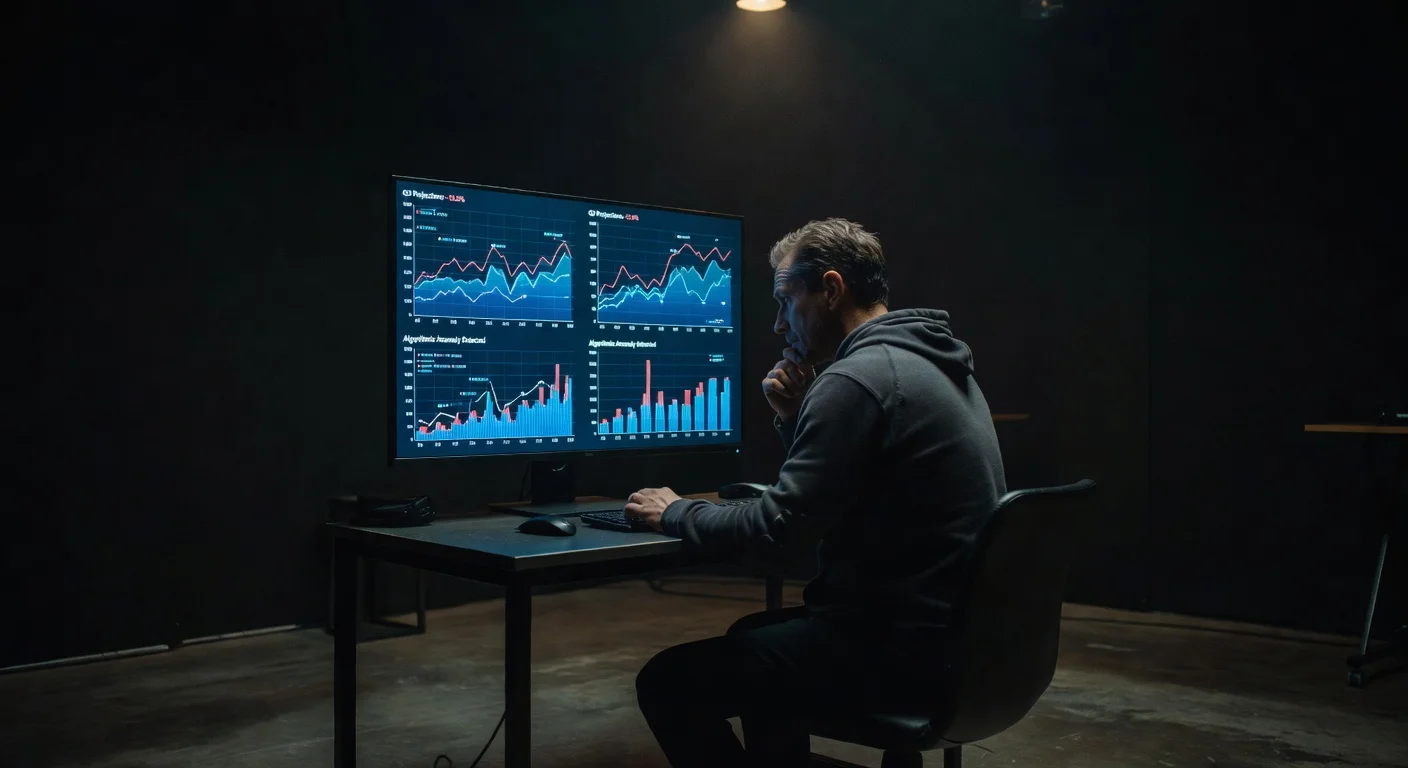
Getting a million views on a trending audio clip feels great, but it rarely translates into selling a $5,000 consulting package. When your goal is to sell premium services, courses, or B2B software through short-form video, raw viewership is a vanity metric. To build the kind of trust required for premium conversions, you need to track and optimize the Value-Per-Minute metric.
The Value-Per-Minute (VPM) metric measures the density of actionable, novel information delivered relative to the length of your video. High-ticket buyers have capital, but they lack time. If your 60-second educational short spends 20 seconds stating obvious context, you lose the exact audience capable of affording your offers.
This guide breaks down how to calculate, optimize, and map your content's VPM to ensure every second builds authority and drives high-ticket lead generation.
Defining the Value-Per-Minute Metric
Standard social media analytics reward watch time and completion rate. Algorithms don't inherently care why someone watched a video twice—only that they did. You can achieve high completion rates by using confusing edits, loopable audio, or withholding the "payoff" until the final frame.
Those tactics work for ad revenue. They fail completely for high-ticket sales.
High-ticket educational shorts require a different approach. You must treat the viewer's attention as an expensive commodity. VPM is a conceptual framework that forces you to evaluate your script and editing choices through the lens of information density.
Every component of your video falls into one of three categories:
- Core Value: Novel insights, counter-intuitive data, specific frameworks, or tactical steps.
- Delivery Mechanism: Hooks, transitions, visual evidence, and narrative structure that make the core value digestible.
- Friction: Fluff, repetitive phrasing, generic background context, or self-indulgent branding.
Your goal is to maximize the first, optimize the second, and aggressively eliminate the third.
| Component | Example in an Educational Short | Impact on VPM |
|---|---|---|
| Core Value | "Set your camera aperture to f/2.8 to blur the background." | High Positive |
| Delivery Mechanism | Showing a split-screen before/after of the aperture change. | Neutral/Positive |
| Friction | "Hey guys, welcome back to my channel, today we are talking about..." | Negative |
Why High-Ticket Buyers Demand High VPM
Premium buyers use content to evaluate your competence. When you pitch a high-ticket service, the prospect is asking themselves if you possess specialized knowledge that justifies your rate.
If your educational shorts consist of generic advice repurposed from a Wikipedia page, you signal that your paid products are equally superficial. High VPM content proves your expertise by giving away highly specific, advanced information quickly. It shows respect for the viewer's time.
You can often see the impact of high information density on your account's growth trajectory. Creators who switch from generic advice to high-VPM content usually experience a temporary dip in overall views, followed by a sharp increase in qualified leads. You can monitor this shift in audience quality and retention using a TikTok Follower Count Tool to track your baseline growth as you adjust your content strategy.
The Problem with "Dumbing It Down"
Many creators receive advice to simplify their content to reach a broader audience. While extreme jargon alienates people, over-simplification destroys your VPM. If you spend 45 seconds explaining basic terminology before getting to your unique insight, the advanced buyer has already scrolled past.
Speak directly to the buyer currently experiencing the specific problem you solve. Let the beginners catch up contextually.

Analyzing Your Script Density
The script is the foundation of your VPM. You cannot fix a low-density script with fast editing. To evaluate your current content, copy the transcript of your most recent 60-second video and highlight the sentences that deliver an actual takeaway.
Most creators find that their core value doesn't begin until the 20-second mark.
The "Context Trap"
The most common VPM killer is providing unnecessary background information. Creators assume the audience needs a runway to understand the topic.
Low VPM Scripting: "If you run an agency, you know that finding good clients is really hard. The market is saturated right now. Everyone is sending cold emails, and nobody is replying. You need a way to stand out. Let me show you the exact outreach template I use to book five meetings a week." (Time elapsed: 18 seconds. Value delivered: Zero.)
High VPM Scripting: "Stop sending feature-heavy cold emails. Agency owners are booking five meetings a week using this specific two-sentence 'permission to pitch' template. Here is exactly what it says." (Time elapsed: 6 seconds. Value delivered: High. Audience qualified.)
To master this style of direct scripting and keep viewers engaged through the payoff, you need to understand pacing. You can learn more about structuring these concepts in our guide on Scripting for Retentive Attention Using the Narrative Open Loop Strategy.
Eliminating Verbal Padding
Spoken language is naturally full of filler words and repetitive structures. When writing for short-form video, you have to edit ruthlessly.
- Remove "I think that" or "In my opinion". State your point as fact.
- Delete introductory phrases like "So basically," or "At the end of the day."
- Cut bridging sentences. You do not need to explain how point A leads to point B if the connection is logical.
Visual Communication Multiplies VPM
You can deliver two streams of information simultaneously: audio and visual. Creators with high VPM scores utilize the screen to deliver context while their voiceover delivers the core insight.
If you are explaining a complex process, do not describe the visual elements out loud. Show the diagram, highlight the relevant section, and use your voice to explain why it matters. This effectively doubles your information density per second.
Using B-Roll and Text Overlays
Text overlays should not just transcribe your speech. They should emphasize the core takeaway or provide the necessary context you cut from the script.
For example, if your video is about real estate tax strategies, your audio might explain the mechanics of a 1031 exchange. Your visual text overlay can list the specific eligibility requirements. The viewer processes both simultaneously, resulting in a massive spike in VPM.
This requires precise editing to ensure the visual information doesn't overwhelm the viewer. Mastering these subtle visual cues is essential; you can study specific editing techniques for this in our breakdown of 14 Micro-Cut Transitions That Keep Completion Rates Above 60 Percent.

High Production Value vs. High Information Value
There is a persistent myth that high-ticket content requires a cinema-quality studio. Creators spend thousands on 4K cameras, intricate lighting, and complex sets, assuming this signals premium quality to high-ticket buyers.
Production value only matters if it reduces friction. Good audio is non-negotiable because bad audio is a massive source of friction. A clear, well-lit subject helps maintain attention. But an overly polished, commercial-style video can actually hurt your authenticity on platforms like TikTok and Reels.
In fact, highly sterile, over-produced content often triggers ad-blindness. Viewers swipe away before they even process the hook because the video looks like a sponsored placement. We explore this phenomenon deeply in our article on Why Professional Color Grading is Making Your TikTok Content Look Like an Ad.
Information value will always trump production value for educational content. A creator breaking down a complex acquisition strategy on a whiteboard shot with a smartphone will generate more qualified leads than a beautifully color-graded video of someone giving generic mindset advice. If you are operating on a budget, prioritize the script first. You can achieve perfectly acceptable visual quality by reviewing How to Build a Mobile 'Run-and-Gun' Rig for Under $200.
Tracking and Validating Your VPM Strategy
You have audited your scripts, cut the fluff, and increased your visual communication. How do you know if the VPM strategy is working?
You need to analyze specific retention metrics and audience behaviors, moving beyond basic view counts.
The 3-Second to 10-Second Drop-off
Look at your retention graphs on TikTok or Instagram Reels. The percentage of viewers you retain between the 3-second mark and the 10-second mark is the purest indicator of your script's initial density.
A steep cliff here means your hook promised value, but your follow-up sentences felt like filler. The viewer realized they would have to wait too long for the payoff and left. If your line stays relatively flat through the first 10 seconds, your VPM is appropriately high.
Measuring Individual Video Performance
When testing new, highly dense script formats, you need granular data on how that specific video performs in its first few hours. You can monitor the real-time velocity of an individual post using the TikTok Live Video Views Counter Tool to see if the higher density format accelerates engagement faster than your older, slower-paced content.
Analyzing the "Saves" and "Shares" Ratio
High VPM content is inherently re-watchable. When you pack dense, actionable steps into 60 seconds, the viewer cannot memorize it all on the first pass.
They have to save it for later.
For high-ticket educational shorts, the number of "Saves" is a much stronger buying signal than "Likes". A like is a passive acknowledgment. A save means the viewer intends to implement your framework. If your Saves-to-Views ratio increases after implementing a strict VPM filter on your scripts, your content is resonating with practitioners rather than just casual scrollers.
Do not panic if your new, dense content initially gets fewer views. The algorithm is recalibrating your audience. Stick with the strategy. If you get nervous and pull the content down, you damage your account's data profile. Read Why You Should Stop Deleting Poorly Performing Videos Immediately to understand the mechanics of algorithmic memory.

Applying VPM to Live Video Formats
The concept of Value-Per-Minute is most easily applied to pre-recorded, heavily edited shorts. But it is equally critical when hosting live streams to pitch high-ticket offers.
Live streams naturally have a lower VPM than edited shorts because of real-time interaction, Q&A, and technical setup. Viewers accept this lower density in exchange for the chance to interact with you directly. However, many creators use this as an excuse to ramble for 45 minutes without providing concrete value.
If you host a TikTok Live to generate consultation calls, you must plan structured bursts of high-VPM content throughout the broadcast.
- Minute 0-5: Welcome viewers, but immediately state the specific problem you will solve today.
- Minute 5-15: Deliver a highly structured, dense whiteboard breakdown of a framework. (High VPM burst).
- Minute 15-25: Q&A focused strictly on the framework.
- Minute 25-30: Introduce your high-ticket offer as the implementation vehicle for the framework.
To keep viewers locked in during these sessions, you need specific engagement tactics. Review our guide on 10 TikTok Live Strategies to Turn Viewers Into Loyal Followers. If you are running live streams alongside competitors in your niche, you can benchmark your real-time audience retention against theirs using a TikTok Live Follower Comparison tool.
The Pitch: Transitioning from Value to Sale
High VPM content builds immense goodwill. When you consistently deliver dense, actionable insights, the audience begins to view you as an authoritative resource.
The mistake creators make is abruptly shifting from high-value education to a low-value, generic pitch.
"If you liked this video, click the link in my bio to buy my course."
This sudden drop in information density causes friction. Instead, your call-to-action should maintain the same VPM standards as the rest of the video. Frame the pitch as the logical next step in solving the problem you just discussed.
High VPM Pitch: "This two-sentence cold email template will get you replies. But if your backend sales process is broken, those replies won't turn into revenue. I built a 45-minute training on how to close these specific leads over Zoom, and it's linked on my profile."
The pitch itself provides value by identifying the next bottleneck the viewer will face. It maintains the density and authority established in the first 50 seconds of the video.
Optimizing your Value-Per-Minute metric requires a total shift in how you evaluate content. You have to stop measuring success by the volume of people who saw your video, and start measuring it by the density of information you successfully transferred to the right buyer. Cut the fluff, script for density, use your visuals efficiently, and watch your high-ticket lead flow transform.

Written by
Olivia Miller
Four years managing TikTok accounts for small and mid-sized creators. Five clients past a million followers, a few past five.
More from Olivia